by Dr. JPG Organic Herbals ✓
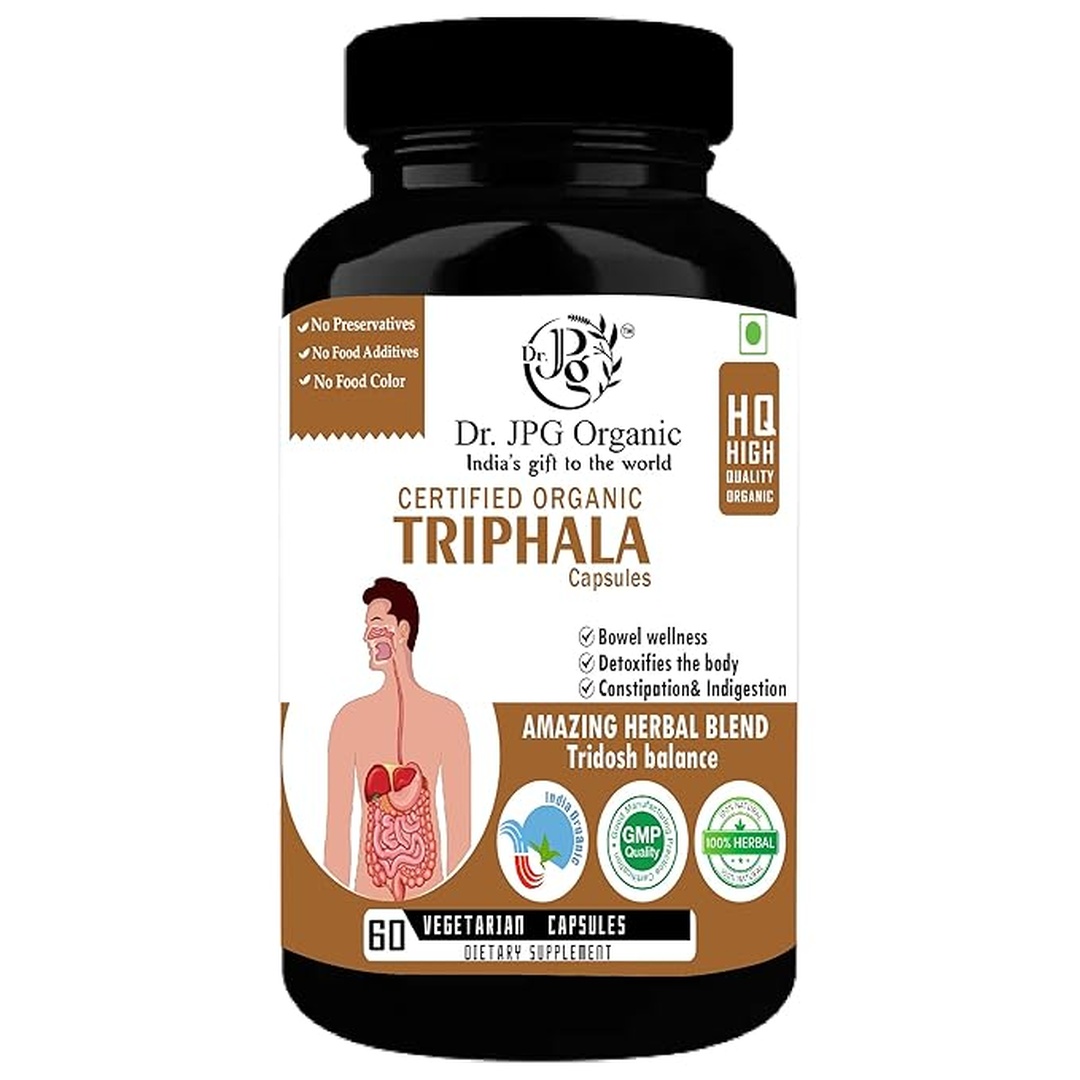
Dr. JPG Organic Triphala Capsules for Digestive Wellness, 60 Veg Capsules
Label verifiedNew listing
₹199MRP ₹30034% off
Delivery in 2–5 days · COD available2–5 days · COD

Triphala, ajwain, hing and jeera in churnas, vatis and syrups for acidity, gas, bloating and irregularity. Digestion is where most Ayurvedic routines begin.
Ayurvedic wellness products support a healthy routine. They are not intended to diagnose, treat, cure or prevent any disease. If you have a medical condition, are pregnant or nursing, or take medicines, speak to a qualified practitioner first.
Digestion is where many Ayurvedic routines begin. Products in this category usually blend familiar kitchen spices with classical herbs. They are traditionally used to support digestive comfort, a light feeling after meals and a regular daily routine. Start by deciding what you want. Some people want comfort after heavy meals. Others want support for regularity. Then pick a form you will actually use every day.
Read the label before you buy. Choose a verified seller, and check the return rule on the product page. Opened food and health items often cannot be returned.
Follow the directions on the pack and do not take more than the stated dose. Herbal products work best as part of a steady routine with regular meals, so give them time. Store them in a cool, dry place with the lid closed. Pregnant or nursing women, children, and anyone with a medical condition or taking medicines should ask a qualified doctor before use.
Neither is better for everyone. Churna is the traditional form and lets you adjust the amount with a doctor's advice. Capsules and tablets are tasteless and easy to carry. Choose the one you will take regularly.
Ask your doctor first. Some herbs may not suit certain medicines or health conditions. Do not change or stop any prescribed medicine on your own.
Divide the number of tablets, capsules or grams in the pack by the daily dose on the label. That tells you how many days one pack will last.
Reviewed by Dr. Durga Chavan, BAMS (Reg. No. I-101312-A), Herbax Ayurveda.