
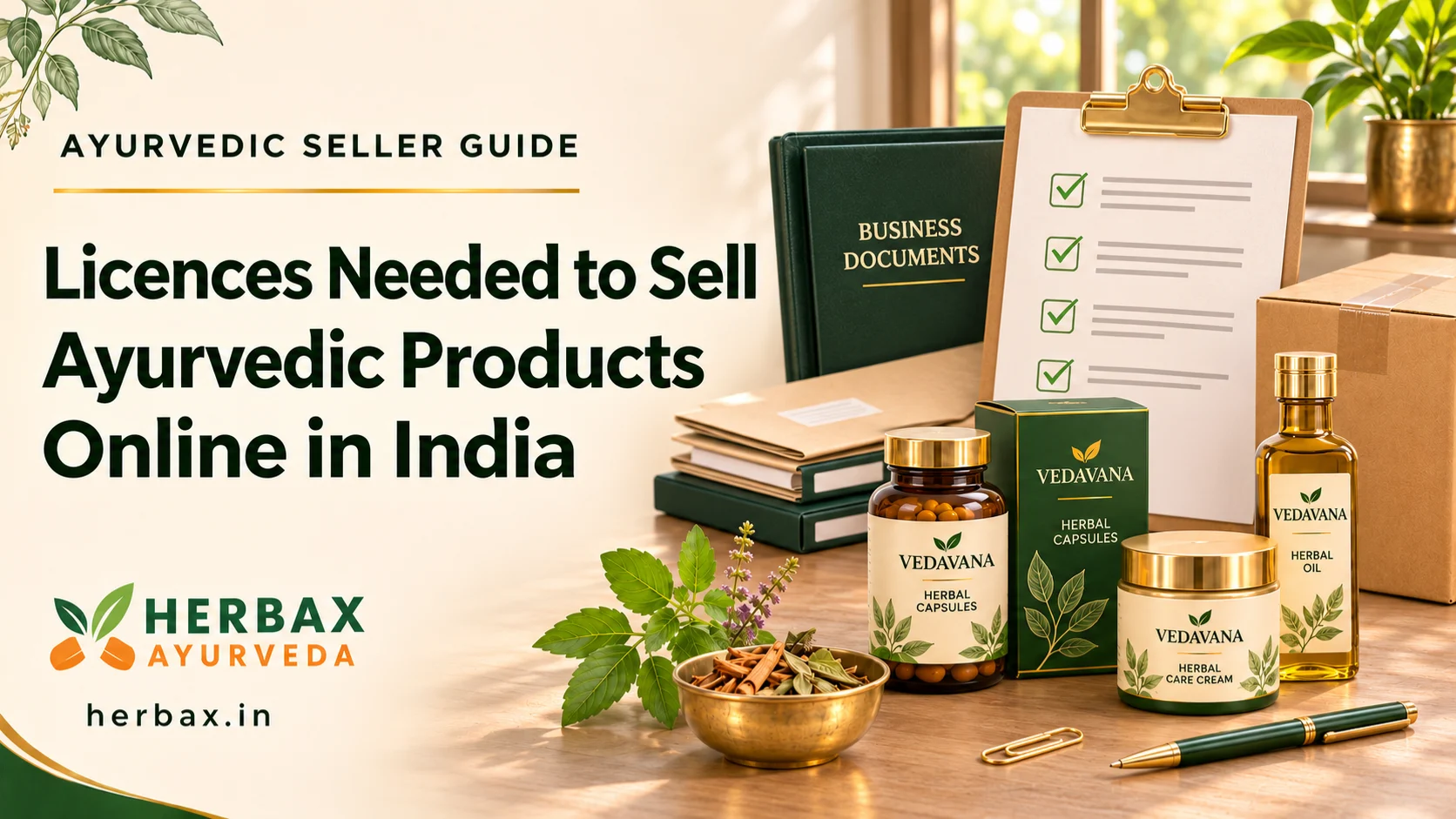
The question sellers ask most is "which licence do I need?" The answer depends on what the product is. This guide lists the licences and registrations that apply to Ayurvedic and herbal products sold online in India, and which seller needs which.
1. Ayurvedic manufacturing licence
For: Ayurvedic medicines, including classical formulations and patent or proprietary medicines (tablets, capsules, churnas, syrups, oils and balms sold as medicine).
These products come under the Drugs and Cosmetics Act, 1940. They must be made in a unit licensed by the State licensing authority for Ayurvedic, Siddha and Unani drugs. There are two common forms:
- Form 25-D: a manufacturing licence for your own factory.
- Form 25-E: a loan licence, which lets you make your products in another company's licensed factory.
The unit must follow Good Manufacturing Practices, and each product is approved under the licence. The licence number is printed on the label.
2. FSSAI registration or licence
For: herbal teas, juices, honey, edible powders and health supplements sold as food.
These come under the Food Safety and Standards Act, 2006. Depending on the size of the business, you need an FSSAI registration, a State licence or a Central licence. The 14-digit FSSAI number is printed on the pack and shown on the online listing.
3. Cosmetics manufacturing licence
For: skincare, hair care, soaps and personal care products sold as cosmetics.
These come under the Cosmetics Rules, 2020, and are made under a cosmetics manufacturing licence from the State licensing authority. A product that makes a medicinal claim may be treated as a medicine instead, so the claim on the label matters.
4. GST registration
For: almost every online seller.
Marketplaces collect TCS against your GSTIN and report your sales. Very small sellers inside the GST exemption can sell through some marketplaces with a declaration, within the limits the GST rules set. Your accountant can confirm which applies.
5. Packaged goods declarations
For: every packed product.
The Legal Metrology rules for packaged goods ask for the MRP, net quantity, month and year of manufacture, name and address of the manufacturer or packer, customer care details and country of origin on the pack. Online listings must show these details too.
6. Trademark registration (recommended)
A registered trademark is not compulsory for selling, but it protects the brand name and many marketplaces ask for it before they treat you as the brand owner. Without it, show an authorisation from the brand owner.
Do I need a drug licence to sell Ayurvedic medicines?
At present, the rules require a licence to manufacture Ayurvedic medicines. A separate sale licence, of the kind chemists hold for allopathic medicines, is not required for Ayurvedic medicines. Marketplaces still check the manufacturing licence of every product before a listing goes live. Rules can change, so confirm the current position with your State authority.
Which licence for which seller
- Manufacturer selling its own brand: own manufacturing licence, GST, label declarations.
- Brand owner using a third-party manufacturer: the manufacturer's licence (or your loan licence), an agreement with the manufacturer, GST, trademark. See our guide to selling under your own brand with a third-party manufacturer.
- Authorised distributor or reseller: the product's manufacturing licence copy, an authorisation letter from the brand, GST.
What Herbax asks for
Herbax checks GSTIN and PAN during registration, then the licence that applies to each product: the Ayurvedic manufacturing licence, FSSAI or cosmetics licence, with brand ownership or authorisation. The full list is on the Sell on Herbax page, and the step-by-step route is in how to sell Ayurvedic products online in India.
This article is general guidance, not legal advice. Requirements differ by product and State and can change, so confirm with your State licensing authority or your consultant.
Ayurvedic wellness products support a healthy routine. They are not intended to diagnose, treat, cure or prevent any disease. If you have a medical condition, are pregnant or nursing, or take medicines, speak to a qualified practitioner first.
Related articles
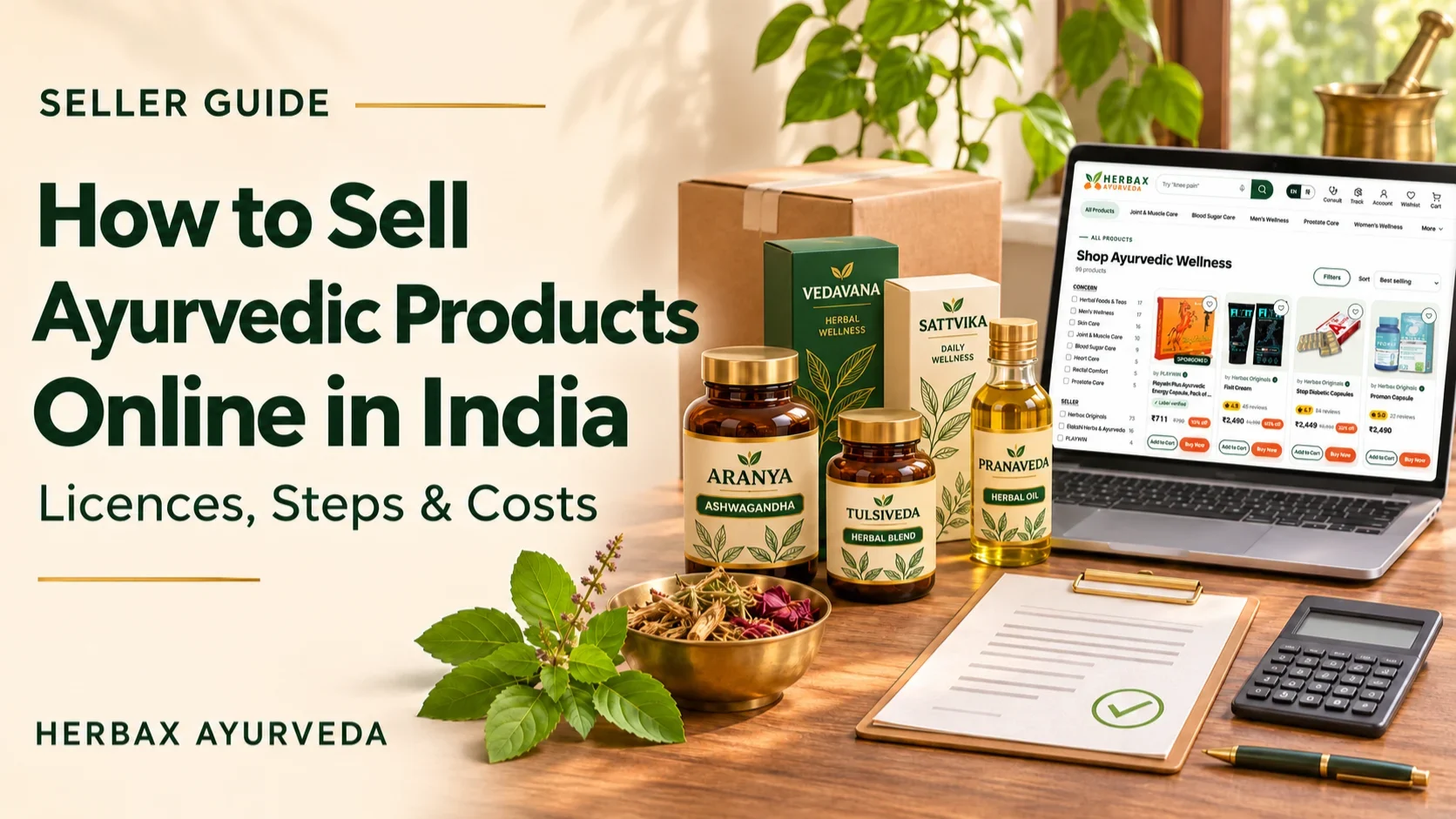
How to Sell Ayurvedic Products Online in India: Licences, Steps and Costs
The licences, tax registration, label rules and steps a brand needs to sell Ayurvedic products online in India, with an example of marketplace costs.
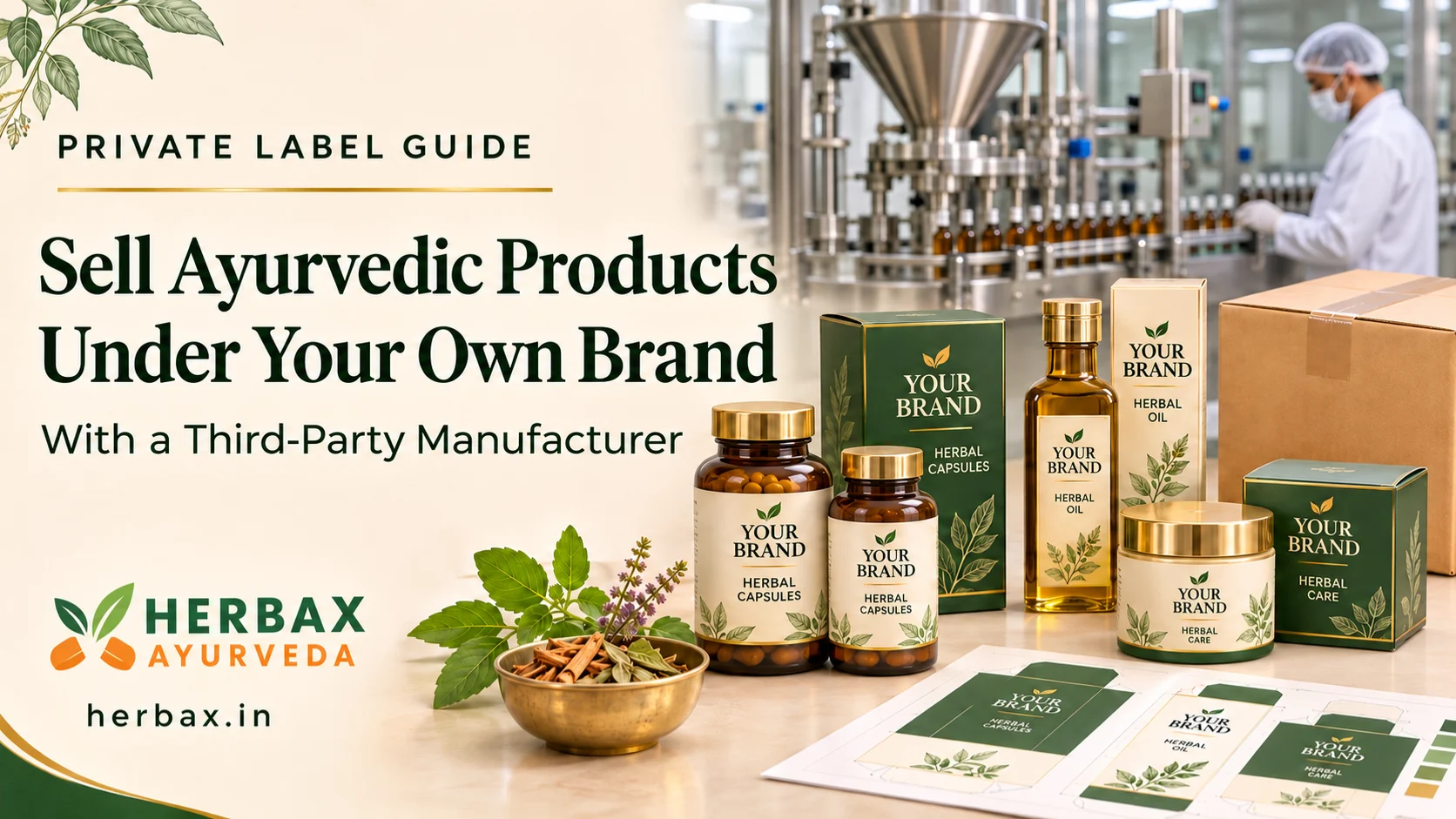
How to Sell Ayurvedic Products Under Your Own Brand with a Third-Party Manufacturer
How third-party manufacturing and loan licences work for Ayurvedic brands, what to check with the manufacturer, and what you need to list online.

Gokshura (Tribulus terrestris): Uses in Ayurveda, Qualities and Forms
Gokshura, or puncture vine, is a cooling, rejuvenating Ayurvedic herb traditionally valued for urinary comfort and the strength of the reproductive system.