
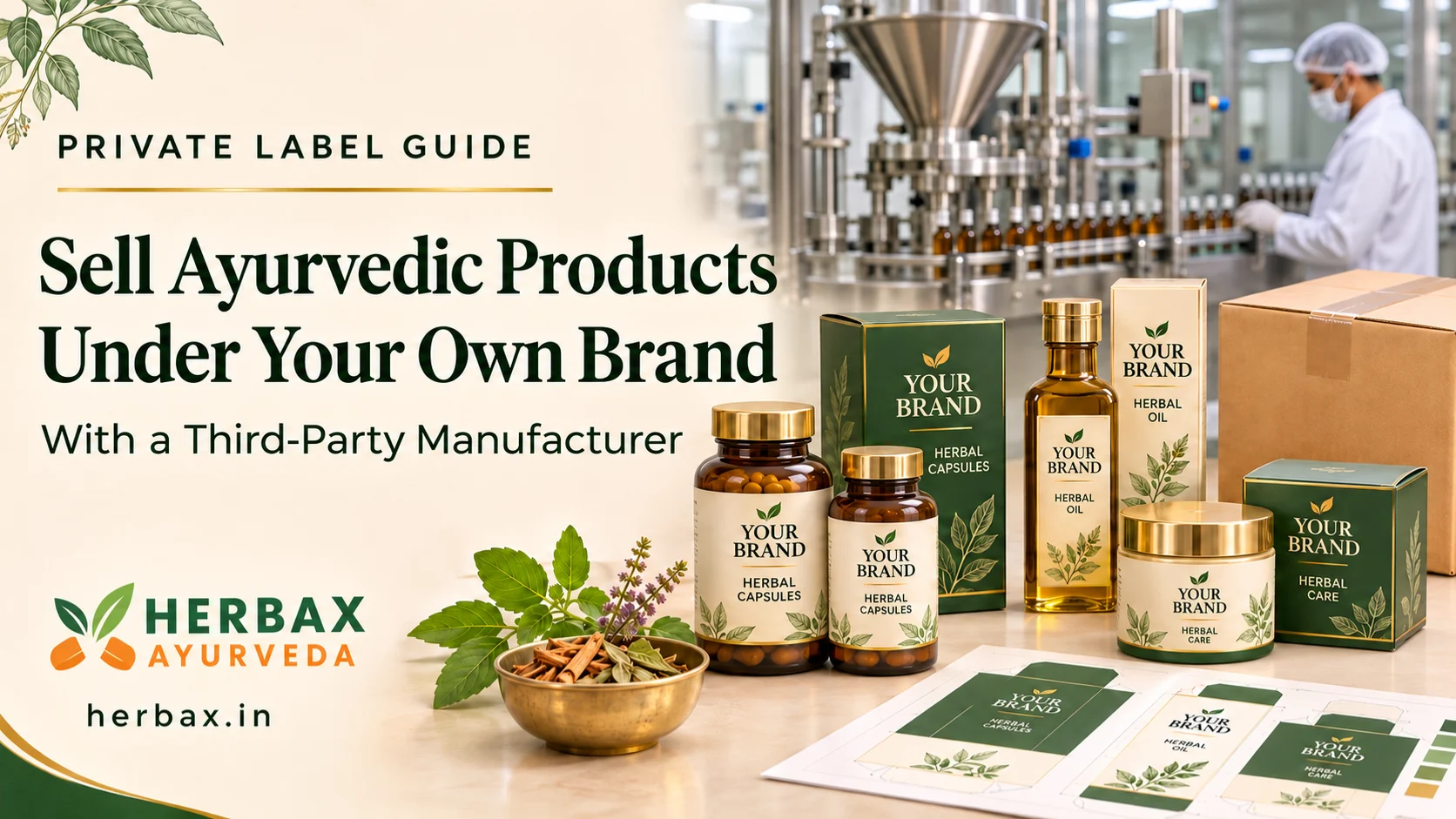
You do not need your own factory to launch an Ayurvedic brand. Many brands in India have their products made by a licensed manufacturer and sell them under their own name. This is usually called third-party or contract manufacturing. Here is how it works and what you need before you sell online.
Two ways to do it
- Marketed by your brand, made by the manufacturer. The manufacturer makes the product under its own licence. The label shows the manufacturer's name, address and licence number, and names your business as the marketer. This is the quickest route.
- Loan licence. You apply to the State licensing authority for a loan licence (Form 25-E for Ayurvedic medicines) to make your products in the manufacturer's licensed factory. The licence is then in your name. It takes longer but gives you more control.
Choosing a manufacturer
- Ask for a copy of the manufacturing licence and check that it is valid and covers the dosage form you want (capsule, tablet, syrup, oil).
- Ask for the GMP certificate.
- Confirm that your specific product is approved under their licence, or will be added to it.
- Ask for a test report for each batch.
- Agree on minimum order quantity, lead time and who supplies the packaging.
Put the agreement in writing
A written agreement should say who owns the formulation and the brand name, who is responsible for quality, what happens to a faulty batch, and that the manufacturer will give you licence copies and batch documents when a marketplace or authority asks.
Protect the brand name
Apply for a trademark in your own name before the first production run. If the manufacturer registers the name, or nobody does, you can lose it later. Marketplaces also use the trademark to decide who the brand owner is.
Check the label before printing
The label must show the manufacturer's licence number, the ingredients with quantities, batch number, manufacturing and expiry dates, net quantity, MRP, and both names: "Manufactured by" and "Marketed by". Keep disease cure claims off the label and off the carton. Fixing a claim after 10,000 cartons are printed is expensive, and listings with cure claims are rejected by marketplaces and ad platforms.
What you need to list online
- GST registration (or exemption declaration), PAN and business bank account
- The manufacturer's licence copy for each product, or your loan licence
- The agreement or an authorisation letter linking you to the manufacturer
- Trademark certificate or application
- Front and back pack photos and product details
On Herbax, you choose your role during registration and upload the manufacturer's licence with your brand authorisation. Our seller team checks the documents and helps with the first listings. You can register as a seller on Herbax, or read which licences apply to your products first.
Common mistakes
- Printing labels before checking that the product is approved under the manufacturer's licence
- No written agreement, so documents are hard to get later
- Brand name not trademarked
- Cure claims on the pack
- No batch test reports on file when a customer complains
This article is general guidance, not legal advice. Requirements differ by product and State and can change, so confirm with your State licensing authority or your consultant.
Ayurvedic wellness products support a healthy routine. They are not intended to diagnose, treat, cure or prevent any disease. If you have a medical condition, are pregnant or nursing, or take medicines, speak to a qualified practitioner first.
Related articles
Licences Needed to Sell Ayurvedic Products Online in India
Which licence applies to which product: Ayurvedic manufacturing licence, FSSAI, cosmetics licence, GST and label declarations, explained for online sellers.
How to Sell Ayurvedic Products Online in India: Licences, Steps and Costs
The licences, tax registration, label rules and steps a brand needs to sell Ayurvedic products online in India, with an example of marketplace costs.

Gokshura (Tribulus terrestris): Uses in Ayurveda, Qualities and Forms
Gokshura, or puncture vine, is a cooling, rejuvenating Ayurvedic herb traditionally valued for urinary comfort and the strength of the reproductive system.